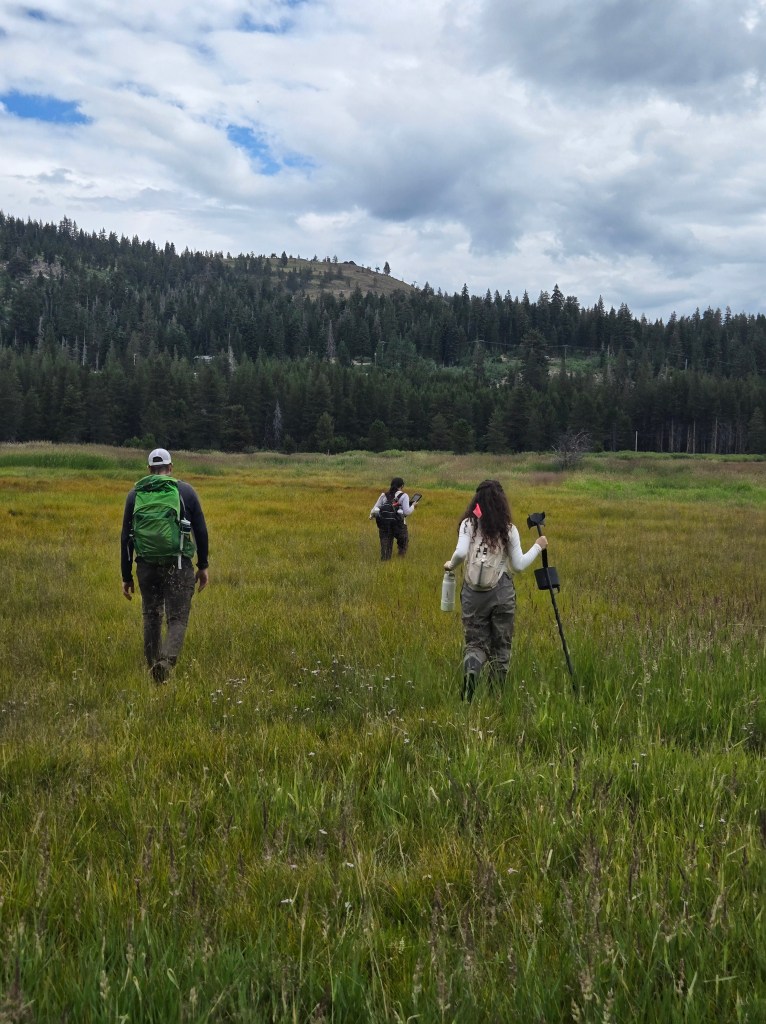
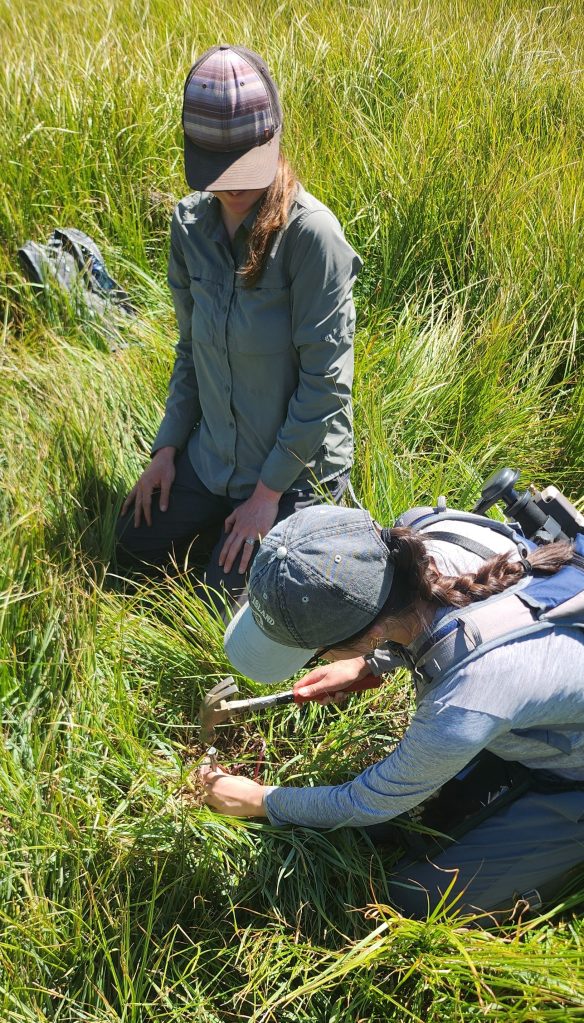
This summer, I had the opportunity to serve as a Learning Facilitator for Earthwatch Institute’s Girls in Science Fellowship.
Over the course of the experience, I watched an impressive group of young women step outside their comfort zones, ask thoughtful questions, learn new skills, and support one another through the challenges and discoveries that come with hands-on field research.
They were curious. They were capable. They were funny, thoughtful, and resilient. And perhaps most importantly, they reminded me why programs like this matter.
The Earthwatch Institute Girls in Science Fellowship is designed to give high school students the opportunity to expand their interest in science and technology while building confidence through hands-on environmental research. Fellows work alongside scientists, contribute to real research, and experience science outside of a traditional classroom setting. The fellowship also intentionally focuses on students who have historically been underrepresented in STEM and may not otherwise have access to experiences like these.
After spending time with this year’s cohort, I don’t think the importance of a program like Girls in Science can be measured only by the data collected or the skills learned. It’s also about something much more personal: helping young people see themselves in a future they may not have imagined before.
Access Change That Feels Possible
Interest and ability are only part of the equation when it comes to pursuing a future in STEM.
A student can be curious about science without knowing what a scientist actually does. They can be interested in environmental issues without having the opportunity to participate in research. They can excel in the classroom and still wonder whether they truly belong in a scientific field. Sometimes, the missing piece is access.
Access to a scientist who is willing to answer questions. Access to a field site that transforms an environmental issue from something discussed in a classroom into something tangible. Access to equipment, research methods, and experiences that make science feel less abstract, and access to other people who share the same curiosity.
Earthwatch’s fellowship model is built around that kind of access. Through immersive field experiences, fellows work alongside scientists and participate directly in environmental research rather than simply learning about it from a distance. The program also emphasizes confidence, belonging, mentorship, and scientific identity—recognizing that access to science isn’t only about getting through the door, but also about feeling that you belong once you’re there.
That distinction feels important to me.
Confidence Isn’t Always Something You Can Teach
You can teach someone how to collect data. You can explain a scientific method or demonstrate how to use a piece of equipment.
Confidence is different. It often grows through experience, and it grows when you try something unfamiliar and realize you can do it. When you ask a question and discover that it was worth asking, and when you make a mistake, learn from it, and try again. It grows when you are surrounded by people who encourage your curiosity instead of making you feel self-conscious about it, and when you see someone who looks like you doing work you once thought belonged to someone else.
Girls in Science creates space for those moments. The fellowship brings students into a supportive community of peers, mentors, and scientists while giving them opportunities to participate in hands-on research and explore questions about leadership, identity, climate action, and future pathways.
As a facilitator, one of the most rewarding parts of the experience was watching the fellows become more comfortable with themselves and with one another.
At the beginning of an experience, a group of students may arrive as strangers, unsure of what to expect. Over time, something begins to change. Questions become more frequent. Conversations become more open. People who may have initially been hesitant begin volunteering ideas, trying new things, and encouraging the people around them.
Those changes can be subtle. But they matter.
Representation and Mentorship Matter, Too
There is another reason programs like Girls in Science are so important: it matters who young people see doing the work.
I think back to my own career and the people who have influenced me along the way. Often, it wasn’t a formal lesson or piece of advice that had the greatest impact. Sometimes it was simply seeing someone doing work I found interesting and realizing that a career path I hadn’t considered might actually be possible.
Young people need those examples.
They need to meet scientists, conservationists, educators, and leaders who can make an unfamiliar path feel more accessible. They also need opportunities to ask honest questions about what those paths look like. The exciting parts, the challenging parts, and everything in between.
A single week isn’t going to determine someone’s entire future. Nor should it. But an experience can introduce a possibility. And sometimes, a possibility is enough to change the questions someone begins asking about their future.
More Than a Week in the Field
When I think back on this summer’s fellowship, I won’t remember only the research activities or the schedule we followed each day.
I’ll remember the cohort.
I’ll remember their questions, their enthusiasm, their willingness to try something new, and the way they supported one another. I hope they remember the experience not simply as a week spent doing science, but as evidence of something larger.
Programs like Girls in Science matter because opportunities like these can expand more than knowledge. They can expand confidence, community, and a young person’s sense of what is possible.
And after spending time with this year’s cohort, I feel optimistic about what they might do next.
Field Note
Sometimes the most important thing an opportunity gives someone isn’t an answer. It’s the confidence to ask, “What else might be possible?”


Leave a comment